By Kelly Lawson
Pathway to Promise is creating spaces where young people can discover hope, healing and a life of flourishing.
Every story at Methodist Children’s Home (MCH) begins differently.
Some young people arrive having experienced instability or hardship that has interrupted nearly every part of life, from friendships to school to family. Others come carrying grief that has followed them for years. Some have learned, far too early, that the world can be difficult.
Yet somewhere along the way, for children, youth and families in MCH care, transformation happens.
It may happen in a classroom where a teacher helps a student believe they can succeed. It may happen during a conversation with a case manager who encourages and affirms a young person and their gifts. It may happen the first time a young adult unlocks the door to an apartment they can call their own.
For most, healing rarely happens in a single moment, but rather, over time, through relationships, and the gift of a supportive community.
That has been true throughout Methodist Children’s Home’s history. For more than 136 years, MCH has walked beside children, youth and families, offering hope through Christ-centered relationships, services and support. Every generation has brought new challenges, and every generation has called MCH to respond in new ways to ensure those in care are equipped for a lifetime of success.
Today, that response is the Pathway to Promise campaign.
Inspired by the words of Psalm 16, “You make known to me the path of life,” the campaign reflects a simple but powerful belief that every young person deserves a path forward. One that is rooted in God’s promises, and a path that leads them toward purpose, confidence and experiencing life to the fullest.
This vision is taking shape through two transformational projects: an innovative new trauma-informed school on the Waco campus and a new state-of-the-art independent living residence for young adults ages 18 to 26.
Together, these two planned facilities tell one story.
A Place to Learn
Education changes lives and opens doors, but for many young people who have experienced trauma, school can be challenging, and learning is anything but simple.
Research shows that chronic stress and trauma affect memory, concentration and emotional regulation, making academic success much harder to achieve. Across Texas, nearly half of students in foster care attend multiple schools in a single year, and only 61 percent graduate from high school, compared with 90 percent of students statewide. Fewer than one in 10 complete a postsecondary degree.
For more than two decades, MCH has partnered with the University of Texas-University Charter School System to provide a different kind of educational experience through small class sizes, individualized instruction, trauma-informed practices, and caring teachers who recognize that before students can fully learn, they often need the opportunity to heal.
Since opening in 2003, the charter school on the MCH Waco residential campus has celebrated 439 graduates. The day student program has maintained a 100 percent graduation rate since launching in 2012, giving students from the larger Waco community access to the same supportive educational environment as MCH residents.
Over time, the need has outgrown the school space.
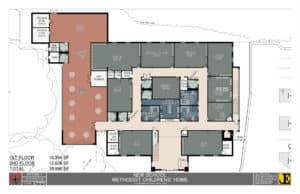
The new 31,000-square-foot academic center has an overall project cost of $18 million and will include classrooms, science and computer labs, a sensory room, cafeteria and health center that are intentionally designed to meet the needs of students who have experienced trauma. Located on the Waco campus near the gym and Embry Vocational Building, the new school will create a more connected campus where academic, vocational and extracurricular opportunities work together.
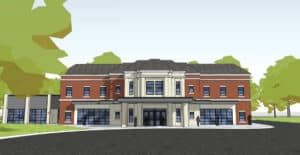
“MCH is committed to educational excellence,” said Trey Oakley, president and CEO. “This new school will give our youth the environment and encouragement they need to flourish.”
Damien: A Future in Motion
Just a few months ago, Damien walked across the stage to receive his diploma from the University of Texas-University Charter School on the MCH Waco residential campus. This fall, he began his first semester at McLennan Community College, taking the next step toward a career in exercise science with hopes of one day coaching athletes.

He’s excited about college and the process of getting there.
After purchasing an e-bike, Damien now rides to work at a local restaurant and to the gym while saving money to buy his first car.
“Right now, I’m just focused on my grades,” he said. “I’m excited for college.”
That sense of purpose is a long way from where he started.
“Life was full of chaos,” Damien said. “I never knew what was coming next. But when I came to MCH, and when I enrolled in the charter school on campus, my life became stable and secure. I didn’t have to worry about what I was going to eat or where I was going to sleep. I knew if I failed, it was a safe place where I could get back up, see where I went wrong and learn from those mistakes.”
He points to one conversation with his home parent, Scott, as the turning point.
“He introduced me to Jesus,” Damien said. “That was probably the best thing I’ve experienced.”
As Damien prepares for college, MCH staff continue helping Damien navigate financial aid, registration and the transition to independent living. Damien lives in one of the Waco campus residential homes designated for young adults pursuing independence through the Independent Living Program (ILP).
Looking ahead, Damien admits he doesn’t know exactly what the future holds, but that uncertainty no longer feels intimidating.
“I’m excited for what God has in store for me,” he said. “I’m excited for the unknown.”
A Place to Launch
Graduation is an exciting milestone and the beginning of greater independence supported by family, mentors and a place to come home.
For many youth aging out of foster care, that same milestone comes with a different reality.
Each year, approximately 1,200 young people age out of foster care in Texas. Many suddenly face adulthood without stable housing, financial support or trusted adults to help navigate life’s biggest decisions. Nationally, between 20 percent and 30 percent of those who age out of foster care in Texas experience homelessness within 18 months. More than half become unemployed, and one in four will experience incarceration within two years.
MCH has worked to change those outcomes through Transition Services and the Independent Living Program.
Through this program, young adults receive life-skills coaching, educational support, career guidance, counseling, spiritual encouragement and stable housing. Most importantly, they remain connected to a loving, supportive community.
Since the program’s inception 20 years ago, 86 percent of participants completed the program as planned, while 94 percent made measurable progress toward independent living skills. Last year alone, 43 young adults pursued advanced education with support from MCH endowed scholarships.
The new 22-unit independent living residence will allow that impact to grow.
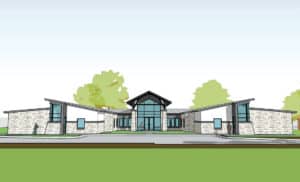
Located adjacent to the MCH Family Outreach Center in Waco at 620 N. Fifth St., the residence has a total project cost of $7.5 million and will provide individual bedrooms, shared community spaces and on-site support while connecting residents to employment resources, educational opportunities and continued mentoring. MCH will break ground on the independent living residence this fall, with residents occupying the space beginning in January 2028.
“This residence will be more than a place to live,” Oakley said. “It will be a community where young people find belonging, build confidence and discover hope for the future.”
Kiki: Growing into Herself
Not long ago, Kiki says she was quick to react.
“I used to have a really bad attitude,” she admitted with a laugh. “I didn’t know how to deal with things that made me upset, so I just took it out on everybody.”
Today, the young woman who once struggled to manage her emotions is balancing college classes at McLennan Community College, a recent promotion to manager at her workplace, and life in her own apartment at Clay Commons, an off-campus apartment complex that is part of the MCH Independent Living Program. Kiki is studying architecture with plans to pursue a career in interior design, a natural fit for someone who has always loved designing and building spaces.
 This growth certainly did not happen overnight.
After Kiki moved from residential group care and the charter school on the Waco campus and into the Independent Living Program, she began seeing herself and her future differently.
“I realized I didn’t have to die on every hill,” she said. “I started focusing on what was really important instead of letting everything get to me.”
That new perspective has shaped the way Kiki approaches work, school and relationships. It has also given her the confidence to tackle adulthood, from learning to cook and manage a budget to advocating for herself at work.
“I’ve come a long way,” she said.
Kiki credits MCH with giving her both the support and the opportunity to grow.
“Just knowing they’re there if I need them has made a big difference,” she said. “They’ve helped me learn how to do life.”
Kiki knows there will still be challenges ahead, but she’s no longer anxious about them. Instead, she’s embracing them one step at a time, building the confidence and resilience to make a future her own.
One Vision
Although the Pathway to Promise campaign includes two different projects, a school and an independent living residence, they share one purpose — giving young people paths toward bright futures. Together, they create a continuum of care that reflects a commitment to supporting young people through some of life’s most pivotal moments.
“We are preparing young people to thrive, to become confident, capable adults who believe their lives have meaning and purpose,” said Traci Wagner, vice president for programs.
An Invitation
As Methodist Children’s Home continues its mission of equipping children, youth and families to flourish, these new facilities will help ensure future generations experience the same hope, healing and opportunity that have defined this ministry for more than a century.
“The Pathway to Promise campaign is an opportunity to make a lasting investment in the places where future generations will learn, heal, grow and prepare for lives of flourishing,” said Lyle Mason, vice president for advancement.
The psalmist reminds us that God “makes known to me the path of life.”
Through the generosity of friends and supporters, Methodist Children’s Home has the privilege of helping young people find that path, and walking beside them every step of the way. MCH invites all to join and learn more about the Pathway to Promise campaign, including ways to financially support and invest in this project at MCH.org/Pathway.


Leave a Reply